Ten Types of Breathing Exercises and Their Benefits
Breathing exercises can have various physical, mental, and emotional benefits. Here are ten common breathing exercises, along with how to perform them and the benefits associated with each:
Deep Breathing (Diaphragmatic Breathing):
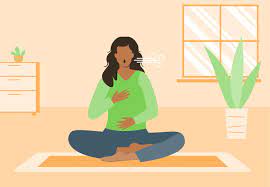
How to Do It: Sit or lie down in a comfortable position. Place one hand on your chest and the other on your abdomen. Inhale slowly through your nose, expanding your diaphragm (belly) and feeling your abdomen rise. Exhale slowly through your mouth. Focus on the rise and fall of your abdomen, keeping your chest relatively still.
Benefits: Deep breathing promotes relaxation, reduces stress, lowers blood pressure, and improves oxygen exchange in the body.
4-7-8 Breathing (Relaxing Breath):
How to Do It: Sit or lie down comfortably. Inhale quietly through your nose for a count of 4. Hold your breath for a count of 7. Exhale completely through your mouth for a count of 8. Repeat several times.
Benefits: This technique can help calm the nervous system, reduce anxiety, and improve sleep quality.
Box Breathing (Four-Square Breathing):
How to Do It: Inhale through your nose for a count of 4. Hold your breath for a count of 4. Exhale through your mouth for a count of 4. Pause and hold your breath for a count of 4. Repeat the cycle several times.
How to Do It: Sit comfortably. Using your right thumb, close off your right nostril. Inhale through your left nostril. Close your left nostril with your right ring finger, and release your right nostril. Exhale through your right nostril. Inhale through your right nostril, close it, and release your left nostril. Exhale through your left nostril. Repeat the cycle.
Benefits: Nadi Shodhana can balance energy, reduce stress, and enhance mental clarity.
Bhramari Pranayama (Bee Breath):
How to Do It: Sit with your back straight. Close your eyes and place your fingers on your ears. Inhale deeply through your nose. Exhale slowly while making a humming sound like a bee.
Benefits: Bee breath can calm the mind, reduce anxiety, and relieve tension.
Kapalabhati (Skull-Shining Breath):
How to Do It: Sit with your back straight. Take a deep breath in. Exhale forcefully by contracting your lower abdomen. The inhalation should be passive. Continue this rapid exhalation-inhalation pattern for a minute or so.
Benefits: Kapalabhati helps improve lung capacity, clear the mind, and increase energy levels.
Ujjayi Breathing (Ocean Breath):
How to Do It: Inhale and exhale through your nose with a slight constriction in the back of your throat. It should create a sound similar to ocean waves.
Benefits: Ujjayi breathing enhances concentration, calms the nervous system, and improves focus during yoga and meditation.
Sama Vritti (Equal Breathing):
How to Do It: Inhale and exhale through your nose for an equal count (e.g., inhale for a count of 4, exhale for a count of 4).
Benefits: Equal breathing can balance the nervous system, reduce stress, and improve concentration.
Belly Breathing for Stress Relief:
How to Do It: Sit or lie down comfortably. Place your hands on your abdomen. Inhale through your nose, expanding your belly. Exhale slowly through your mouth. Focus on the rise and fall of your abdomen.
Benefits: This technique can relieve stress, promote relaxation, and alleviate tension in the body.
Pursed-Lip Breathing:
How to Do It: Inhale through your nose for a count of 2. Exhale through pursed lips (like you’re blowing out a candle) for a count of 4.
Benefits: Pursed-lip breathing can improve lung function, increase oxygen levels, and reduce shortness of breath.
Each of these breathing exercises offers unique benefits, and the choice of which to use depends on individual needs and preferences. Regular practice of these exercises can contribute to improved overall well-being, from reduced stress and anxiety to better focus and relaxation.
Visit the “Nurture Your Spirit” section of HealthyNeighborhood.com to learn about yoga, meditation , breath work and other informative mind-body topics.